PVDF
Piping System
PVDF Piping System – Polyvinylidene Fluoride Pipes, Fittings & Valves
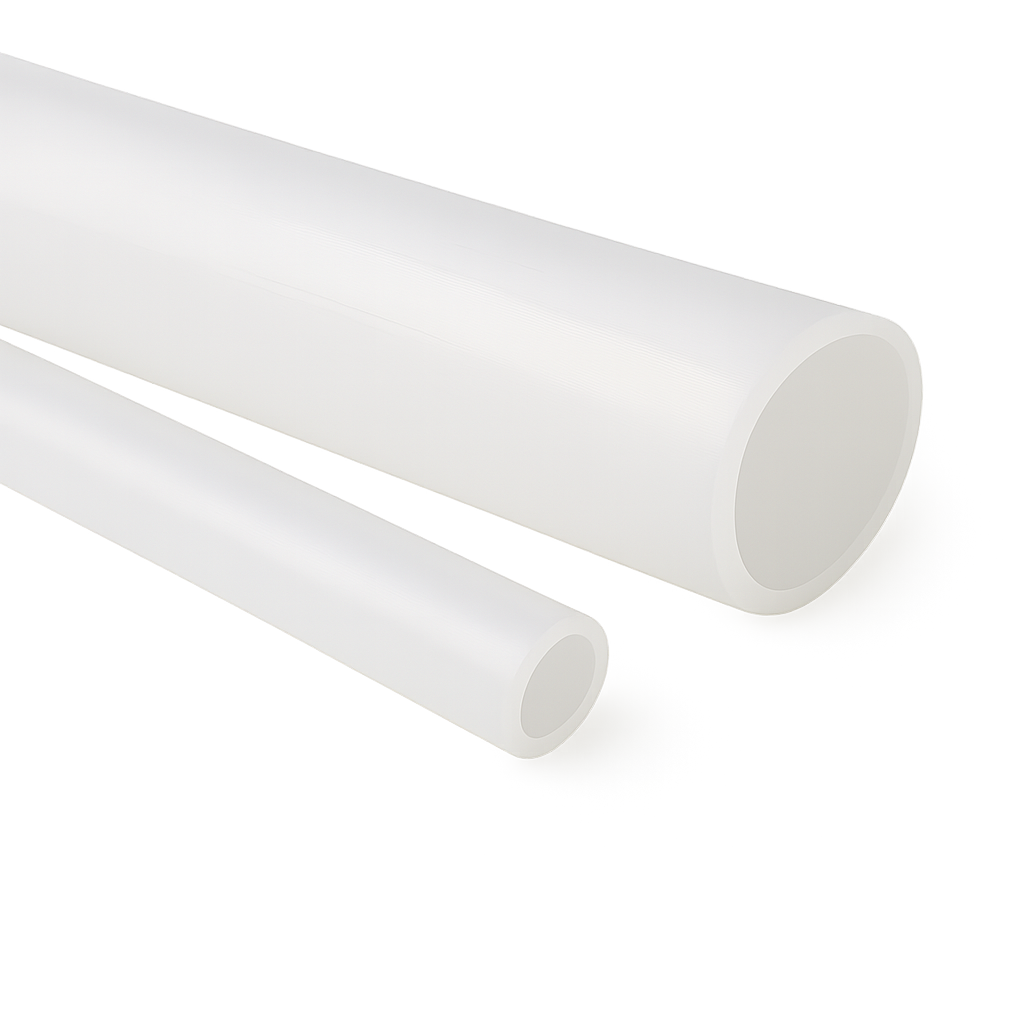
Starke Plastics manufactures high-performance PVDF (Polyvinylidene Fluoride) Piping Systems for high-purity, high-temperature, and aggressive-chemical fluid handling applications. PVDF is a thermoplastic fluoropolymer valued across process industries for its resistance to corrosive chemical media and its stability under demanding service conditions. Engineered from premium-grade PVDF resin and designed to ISO 10931 dimensional standards, our pipes, PVDF Fittings, and valves deliver outstanding chemical resistance, excellent thermal stability up to elevated process temperatures, and consistent purity for critical industrial processes. Starke PVDF piping systems are widely specified in semiconductor industries, pharmaceutical production, ultra-pure water systems, and chemical processing plants where failure is not an option.
Outstanding Chemical & Solvent Resistance
High-Purity Performance
Superior Thermal Stability (up to 140°C)
Excellent UV & Weather Resistance
High Mechanical & Abrasion Resistance
Leak-Proof Fusion-Welded Joints
Key Features & Benefits of
PVDF Piping System
Outstanding Chemical Resistance
PVDF's strong carbon-fluorine molecular bonds provide resistance to a broad range of acids, halogens, strong oxidizers, and organic solvents that attack most other thermoplastics and metals, making PVDF piping a dependable choice for corrosive environments.
High-Purity, Low-Extractable Performance
The inert, non-leaching surface of PVDF makes it well suited to ultra-pure water, semiconductor-grade chemical delivery, and pharmaceutical process lines where product purity is critical.
Superior Thermal Stability
PVDF piping maintains mechanical strength and dimensional stability across a wide operating temperature range, supporting both hot and cold process fluids in the same system. This thermal resistance allows the material to hold its structural integrity even under fluctuating process temperatures.
Excellent Mechanical Strength & Abrasion Resistance
High tensile strength and good impact strength allow PVDF pipe to handle pressurized process lines and abrasive slurries with minimal wear over time.
UV & Weather Resistance
Unlike many thermoplastics, PVDF resists degradation from prolonged sunlight and outdoor exposure, making it suitable for exposed pipe runs and rooftop installations.
Low Flame & Smoke Characteristics
PVDF has inherently low flammability and low smoke generation compared to many other plastic piping materials, an important consideration for indoor industrial installations.
Leak-Proof Jointing
Socket fusion, butt fusion, and flanged connections create homogeneous, mechanically strong joints between PVDF pipe fittings and pipe sections, without gaskets or adhesives in the fused areas — eliminating a common source of leak paths.
Smooth Internal Bore
The smooth inner wall minimizes particulate entrapment and microbial adhesion, supporting consistent flow and easier cleaning/sanitization cycles in high-purity systems.
Corrosion-Free, Long Service Life
PVDF will not rust, scale, or corrode, reducing unplanned downtime and lifecycle maintenance cost compared to lined or coated metal piping.
Lightweight, Easy Installation
Considerably lighter than metal or lined-metal alternatives, PVDF piping reduces support structure requirements, handling effort, and installation time.
Quality Assurance & Manufacturing Excellence
At Starke Plastics, every PVDF piping component is manufactured using premium-quality PVDF resin sourced for consistent purity and performance.
Our manufacturing process focuses on:
- Raw material verification
- Dimensional accuracy inspection
- Pressure performance testing
This commitment ensures reliable performance and long-term durability in critical high-purity and high-temperature industrial applications.
PVDF Material Properties Chart
Properties | Value | Unit | Test Method | |||||
|---|---|---|---|---|---|---|---|---|
Density | 1.78 | g/cm3 | ASTM D792 | |||||
Tensile Modulus | 1700 – 2300 | MPa | ASTM D638 | |||||
Tensile Strength at Yield | 45–55 | MPa | ASTM D638 | |||||
Tensile Strength at Break | 35–55 | MPa | ASTM D638 | |||||
Elongation at Yield | 5–10 | % | ASTM D638 | |||||
Elongation at Break | > 50 | % | ASTM D638 | |||||
Taber Abrasion Resistance
(1000 cycles, 1000 g, CD-10 Wheel) | 5-10 | mg | ASTM D4060 | |||||
Charpy Notched Impact Strength (23 °C) | 40 – 120 | J/m | ASTM D6110 | |||||
Notched Izod Impact Strength (23 °C) | 110 | KJ/m2 | ASTM D256 | |||||
Durometer Hardness
(Shore D, 1 sec, 2,00 mm) | 73 – 80 | Shore-D | ASTM D2240 | |||||
Water Absorption | <0.04 | % | ASTM D570 | |||||
Physiologically Safe | YES | |||||||
Pressure Rating (SDR / PN)
SDR | Pressure Rating (PN) | Typical Use Case |
|---|---|---|
SDR 21 | PN 16 | Higher-pressure process lines, thicker wall for demanding chemical transfer duties |
SDR 33 | PN 10 | General-duty chemical and high-purity fluid transfer at moderate pressure |

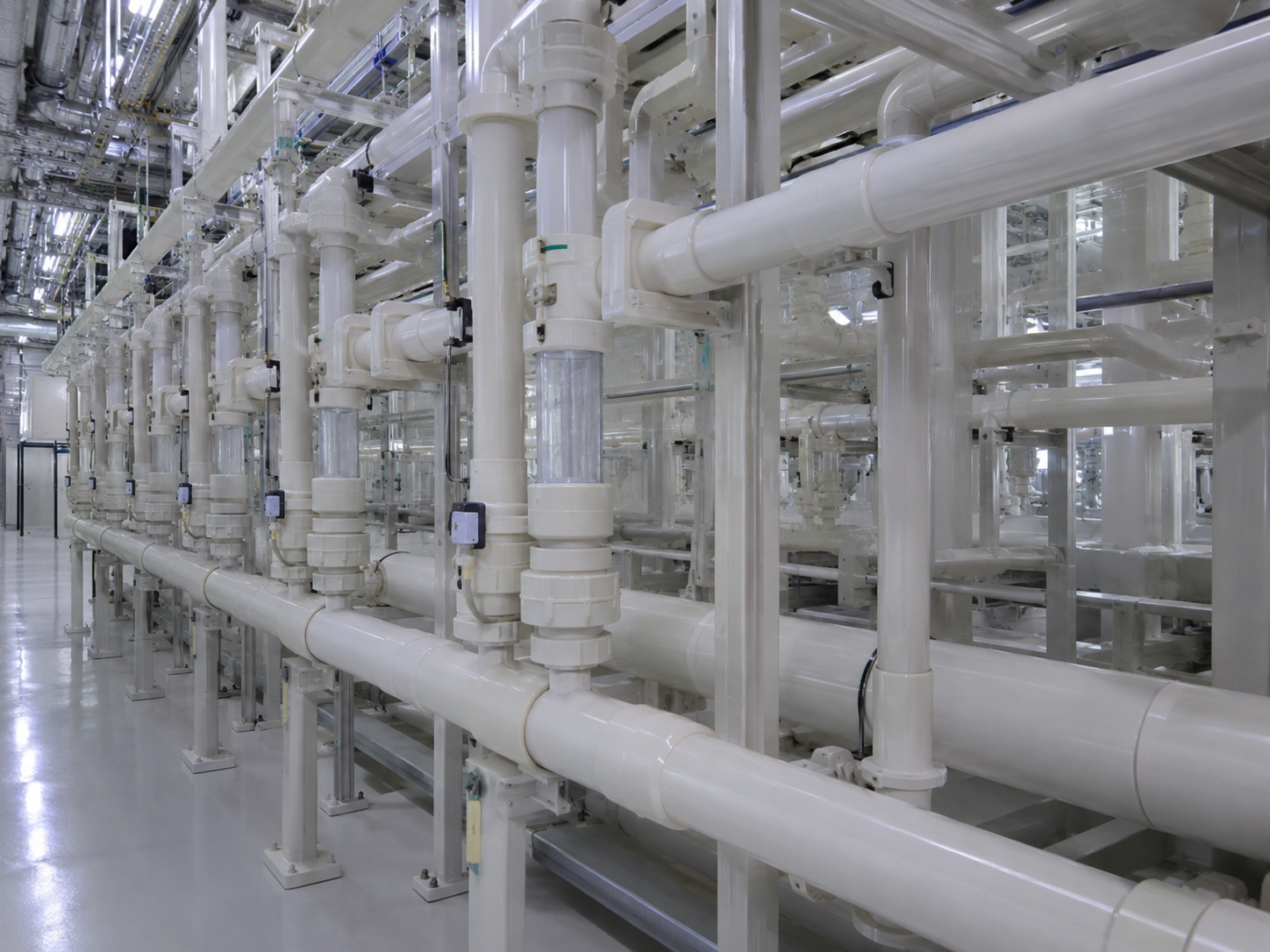
Semiconductor & Electronics Manufacturing
High-purity delivery of process chemicals and ultra-pure water where trace contamination cannot be tolerated.
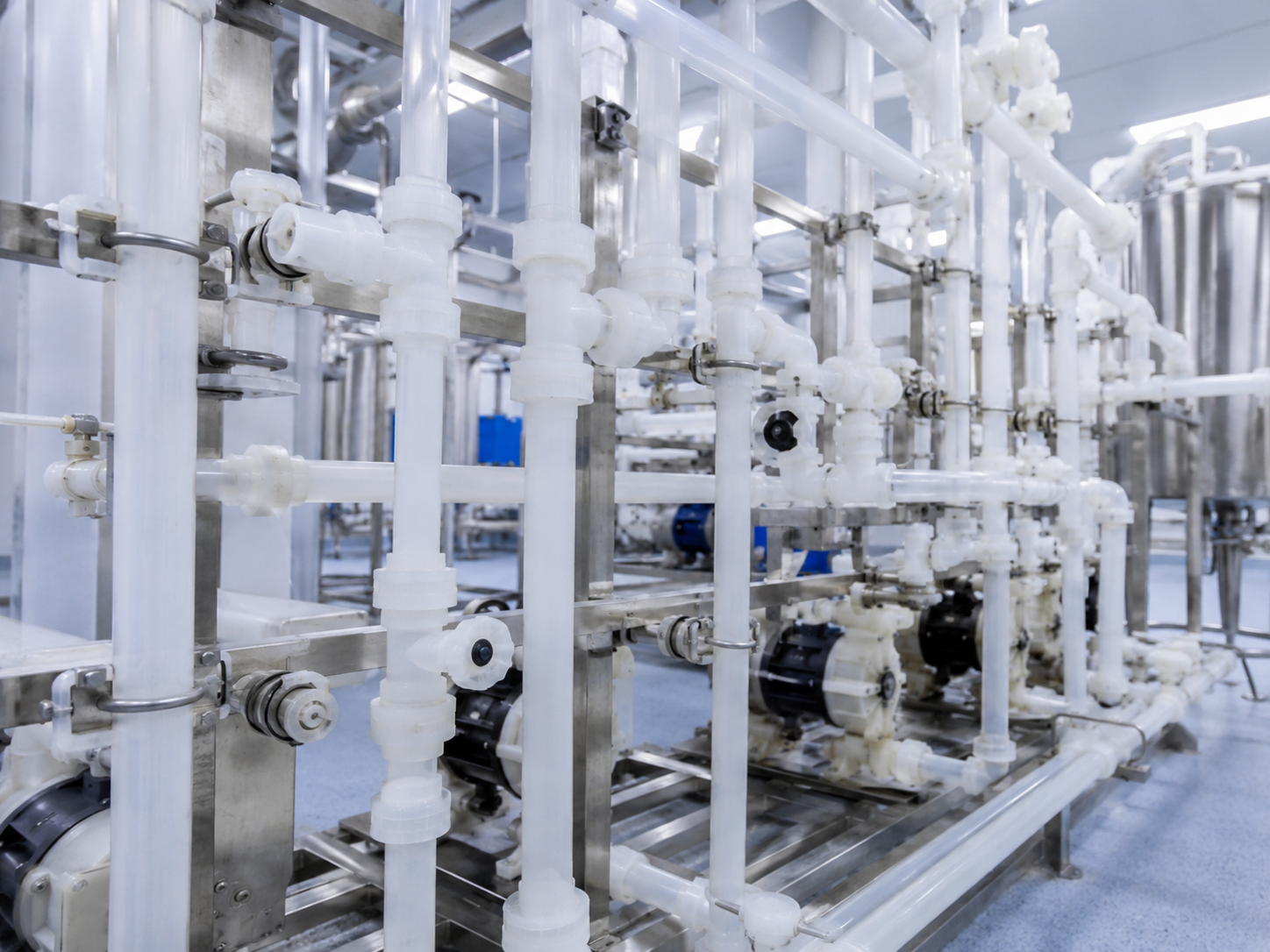
Pharmaceutical & Biotech Production
Process piping for purified water, WFI-adjacent utility lines, and chemical transfer where inertness and cleanability matter.
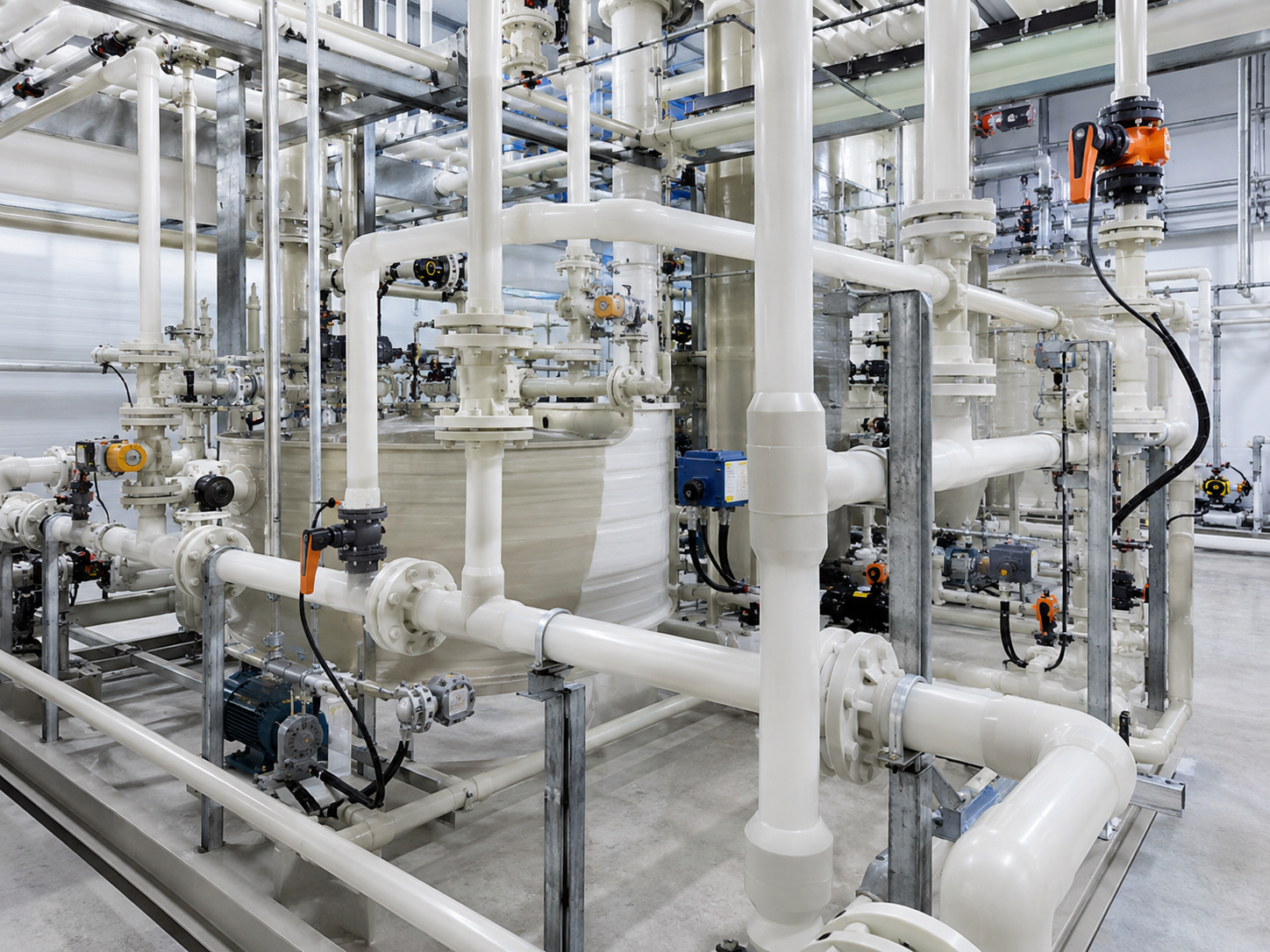
Chemical Processing Plants
Safe transport of aggressive acids, halogenated compounds, and corrosive chemical solvents that exceed the resistance limits of PP or PVC.
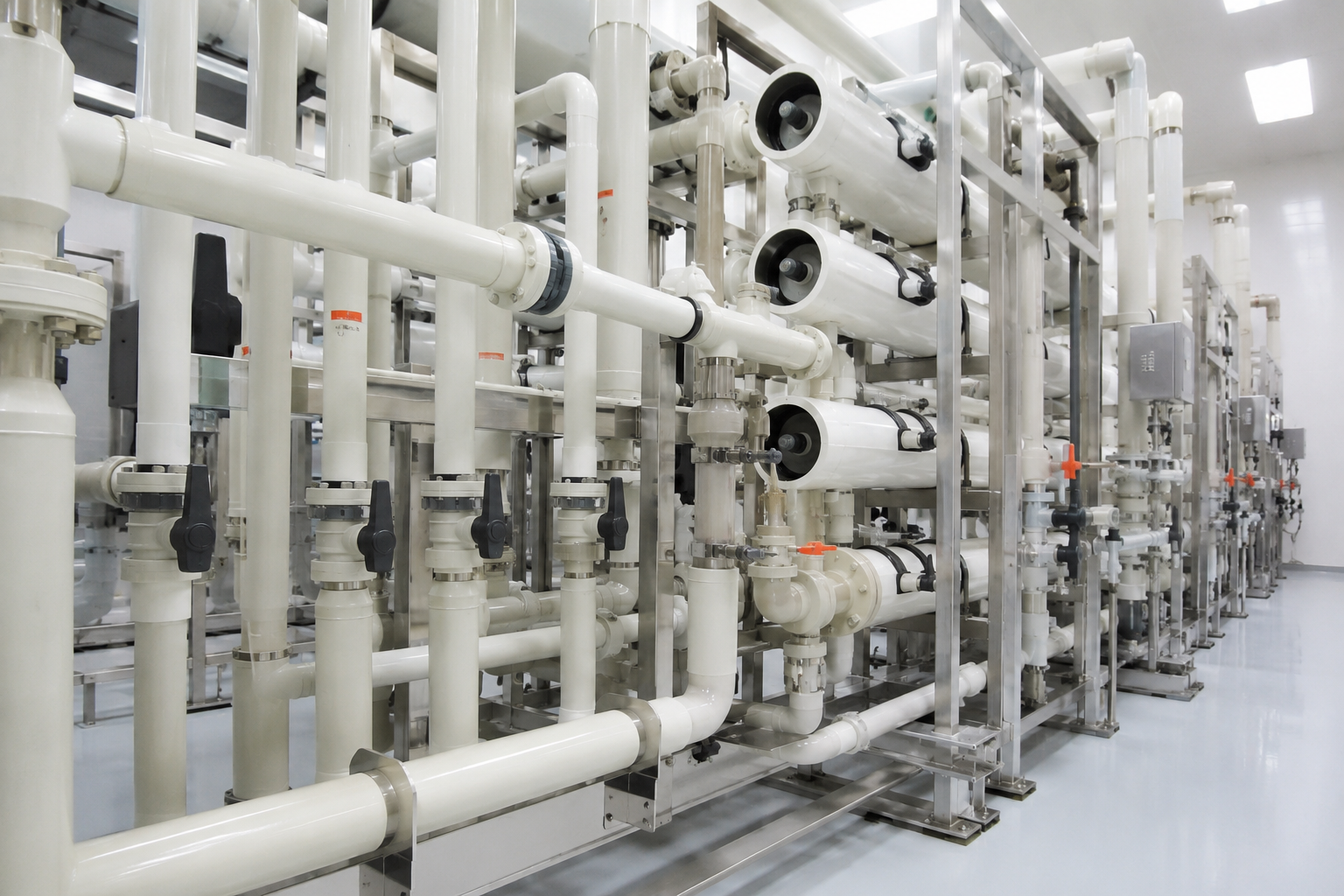
Ultra-Pure & DI Water Systems
Non-leaching bore supports consistent water quality in deionized and reverse-osmosis water loops.
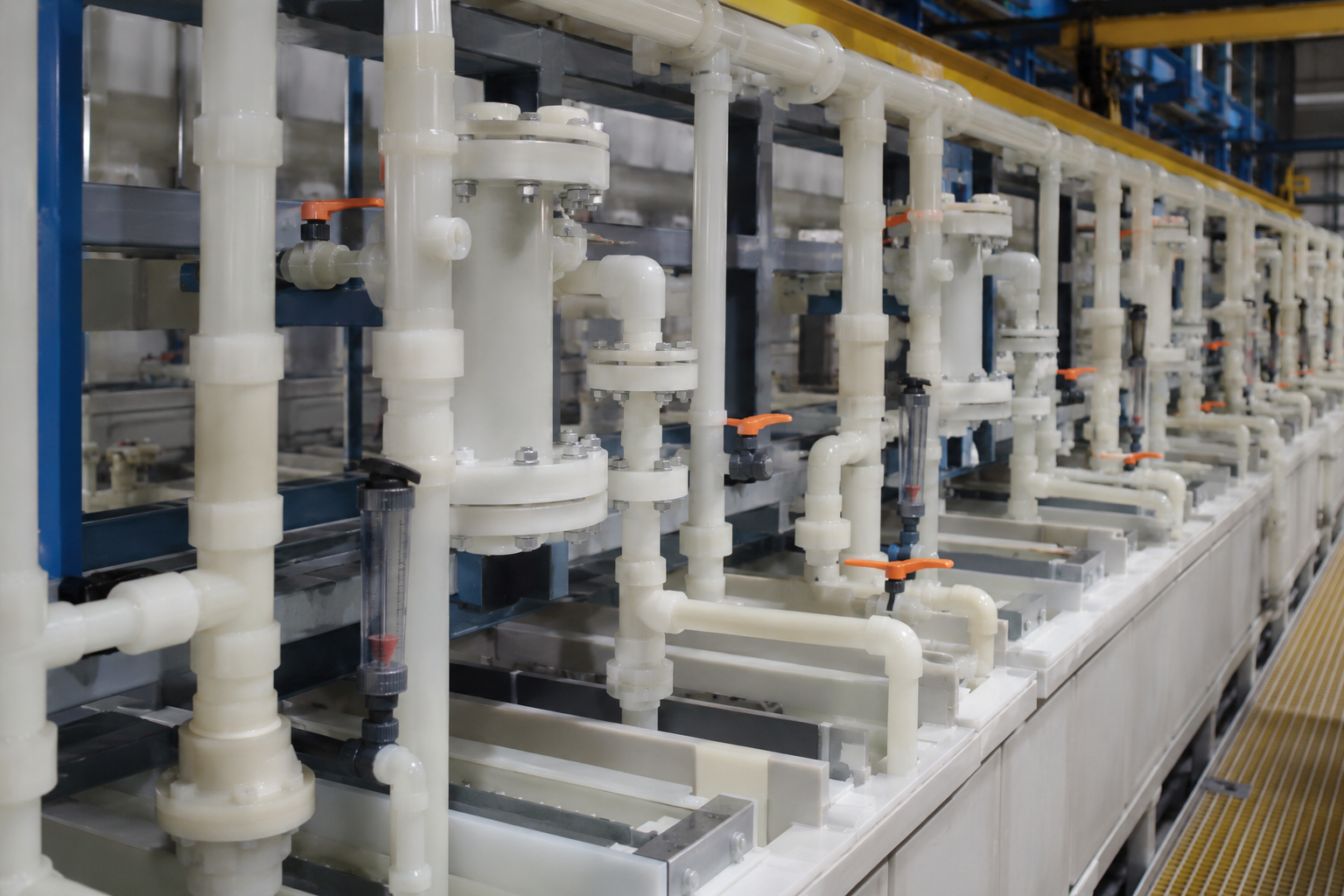
Surface Treatment & Metal Finishing
Handles aggressive plating and pickling chemistries with minimal degradation over extended service life.
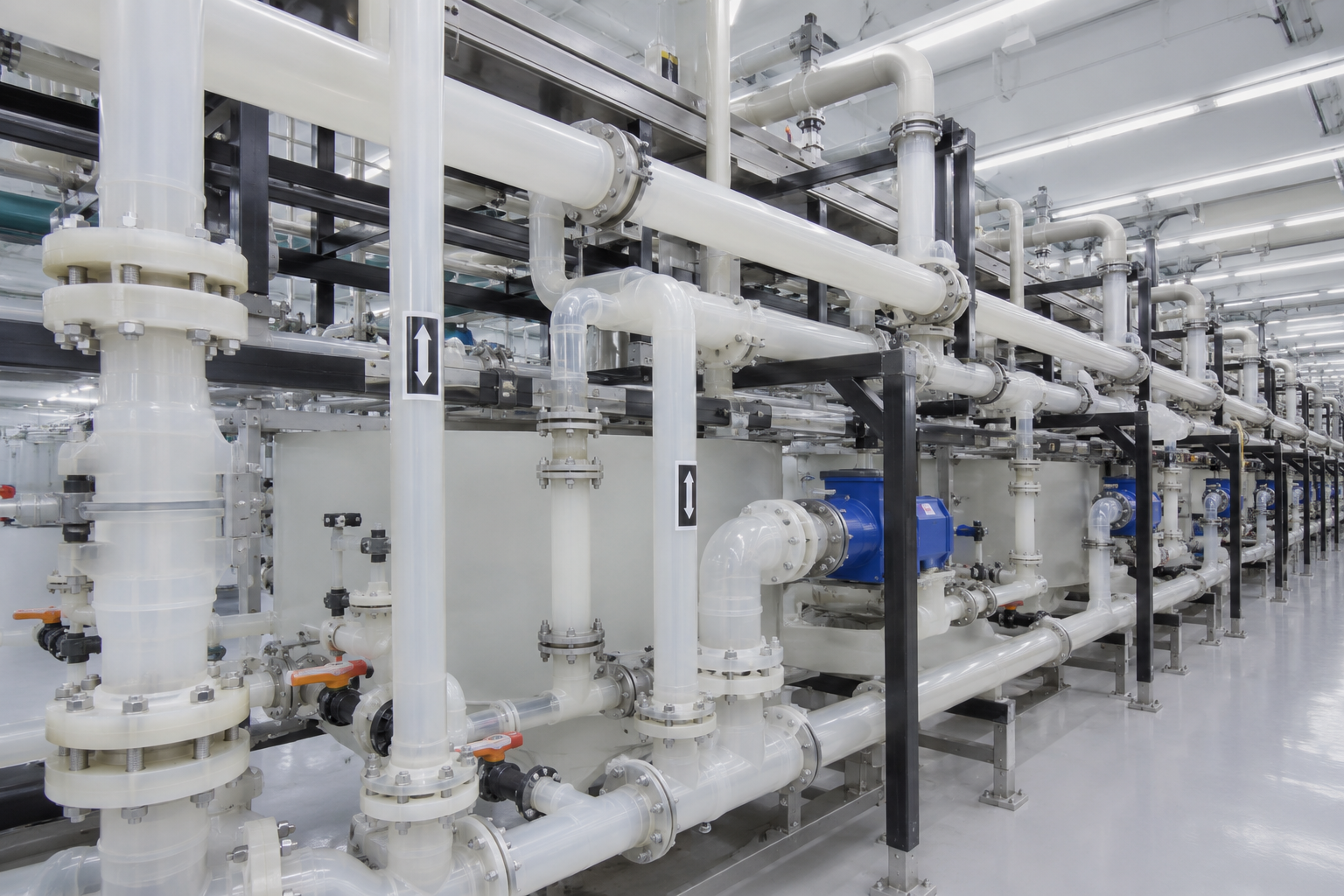
Solar & Photovoltaic Manufacturing
Used in process chemical lines for cell and panel production requiring high chemical purity.
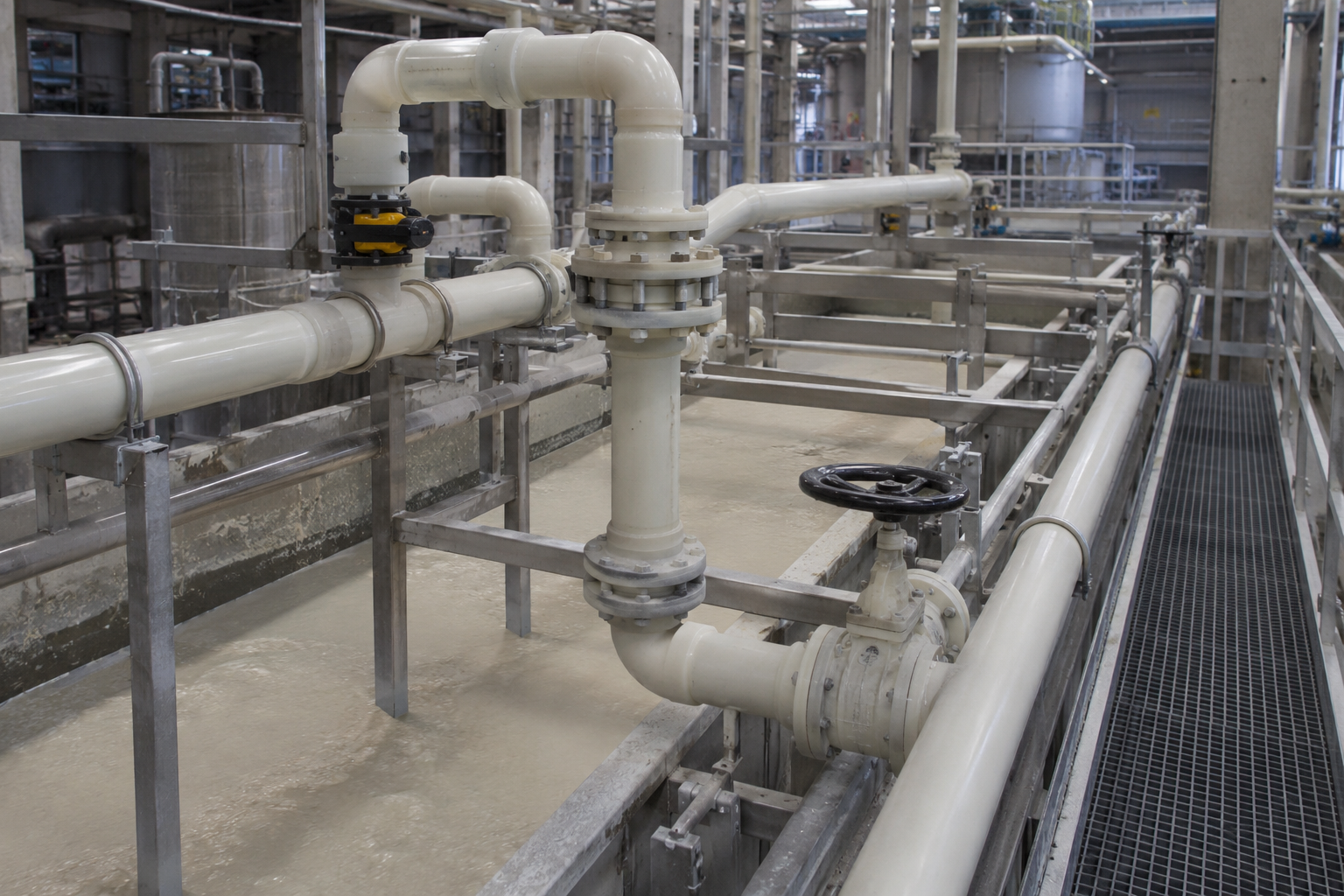
Pulp & Paper Industry
Resists bleaching and processing chemicals in demanding mill environments.
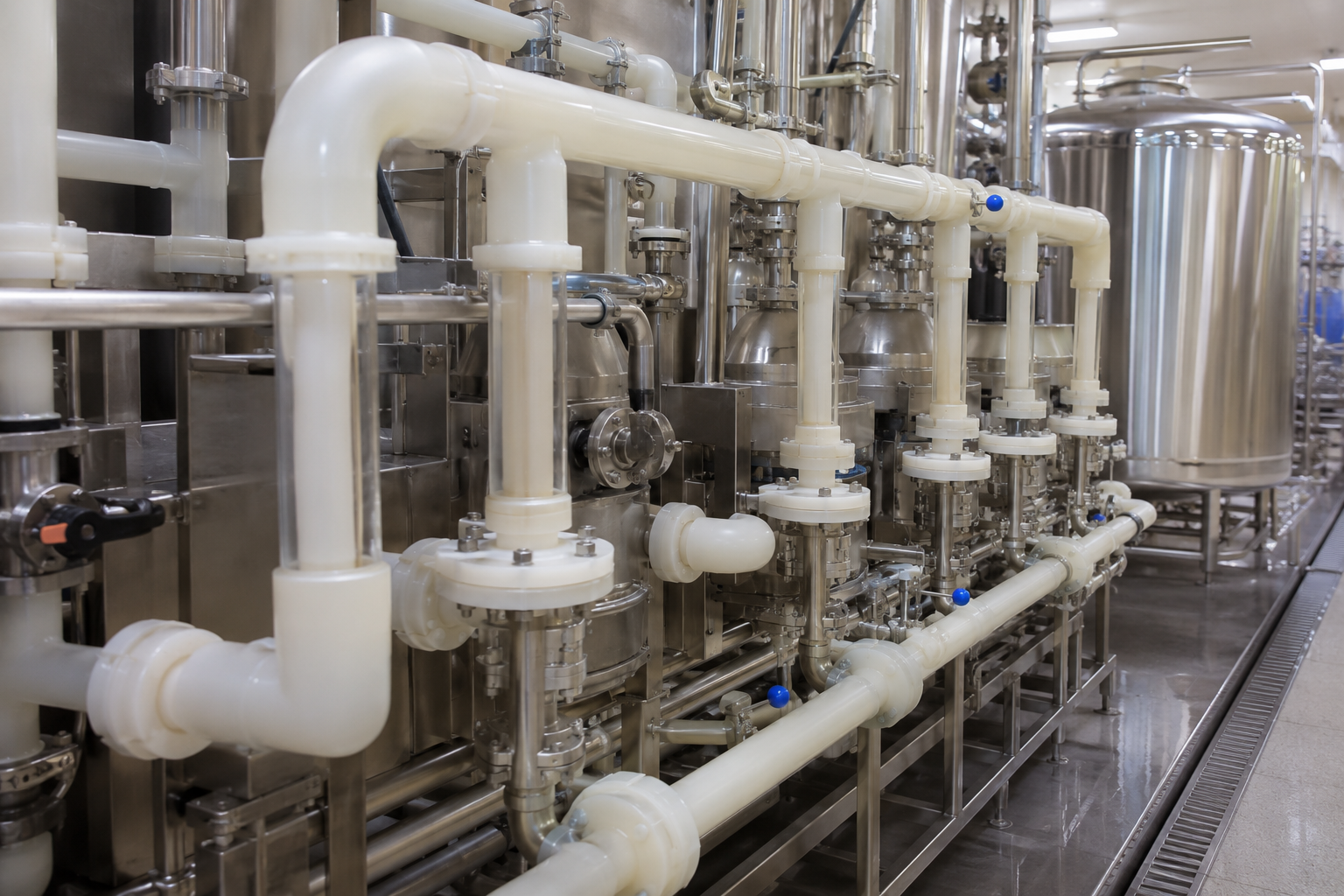
Food & Beverage Processing
Suitable for select high-temperature or chemically aggressive utility lines within food-grade facilities.
PVDF Pipe Joining Methods

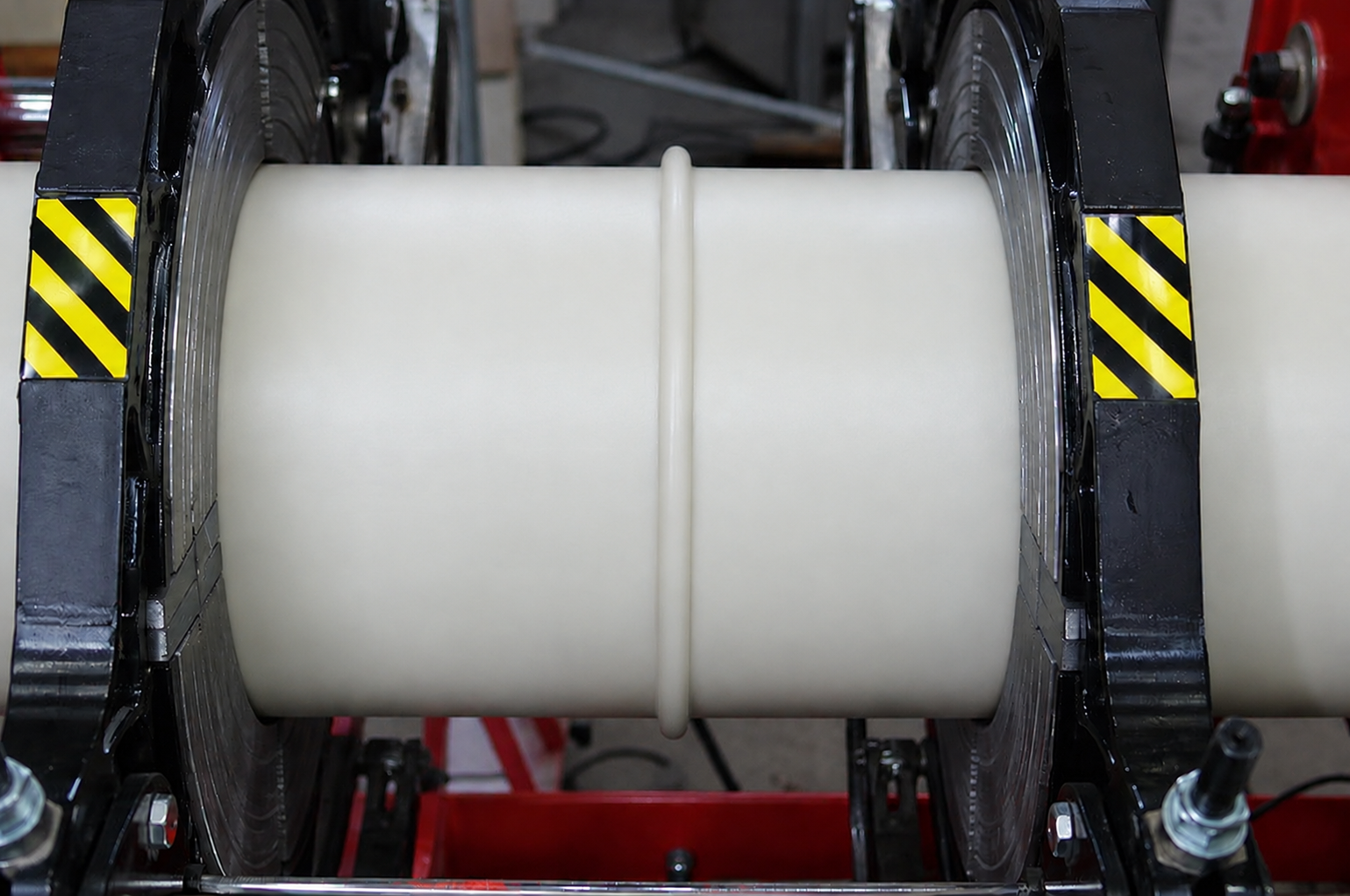
Butt Fusion Welding
For larger diameters, butt fusion produces leak-free joints with tensile strength matching the parent pipe.
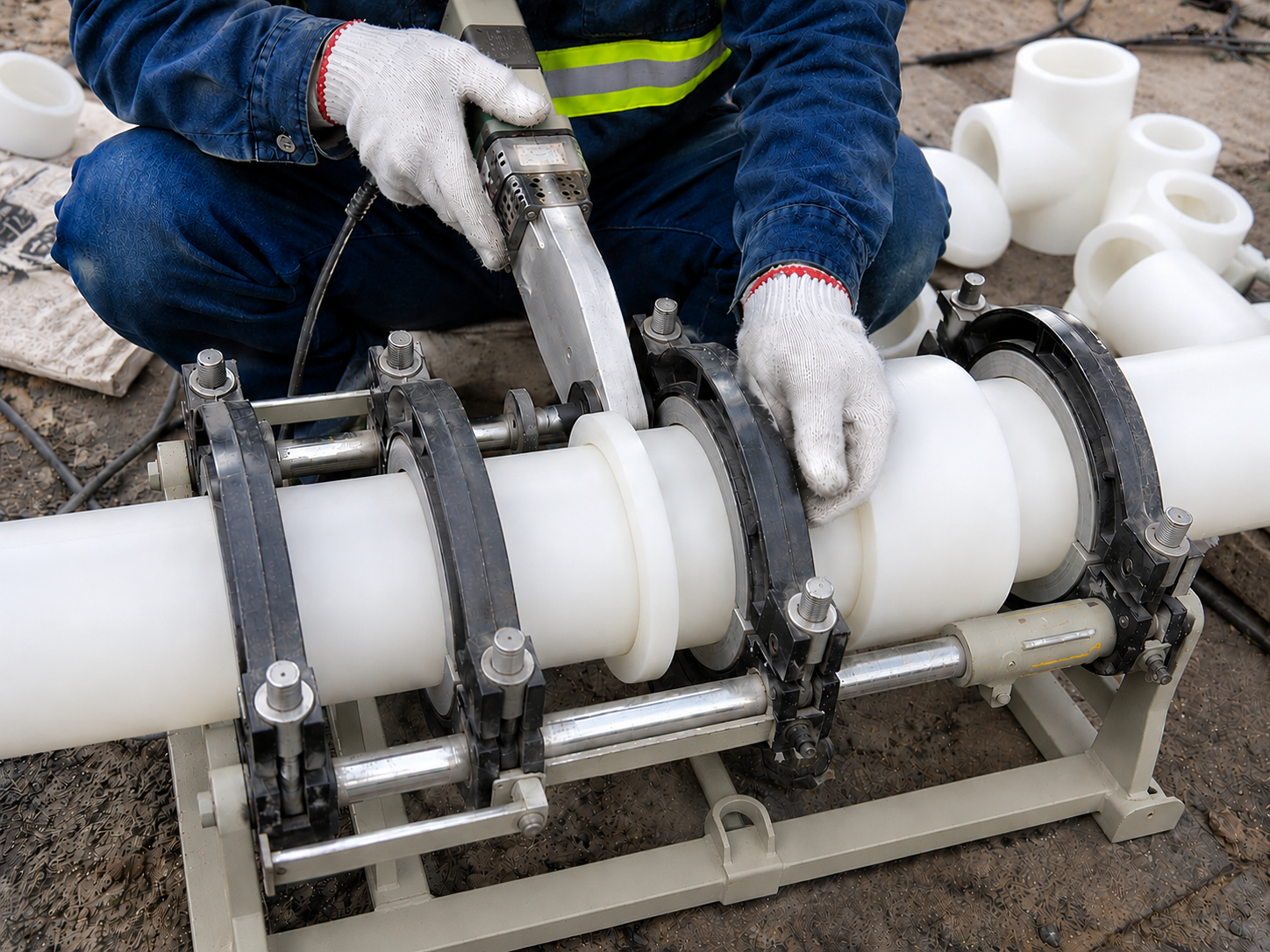
Socket Fusion Welding
Used for smaller diameters, socket fusion creates a strong, homogeneous joint ideal for process piping in high-purity systems.
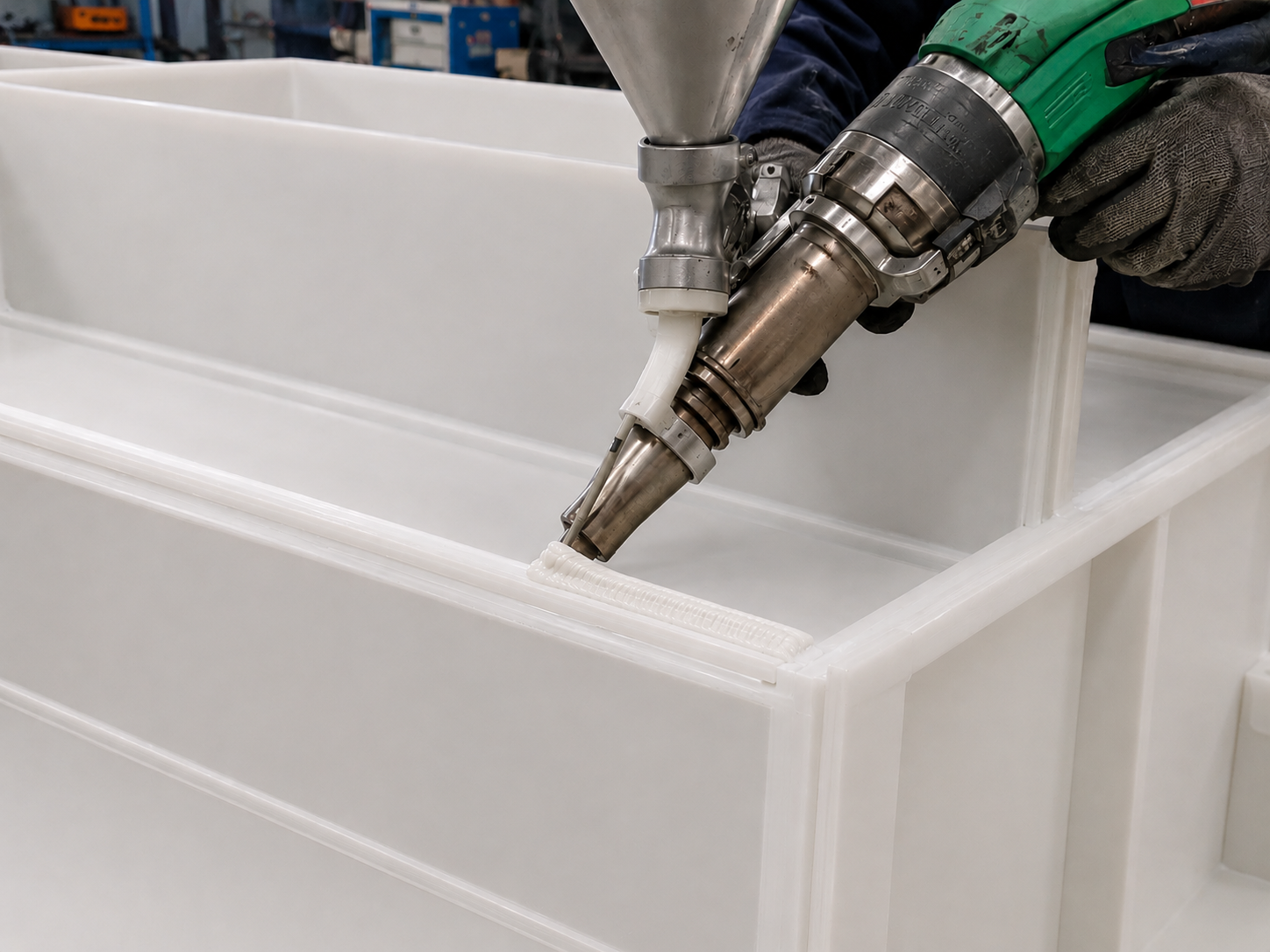
Extrusion Welding
Used for larger-diameter or on-site fabrication work, extrusion welding deposits a continuous weld bead of matching PVDF material to join or reinforce sections with strong, homogeneous seams.
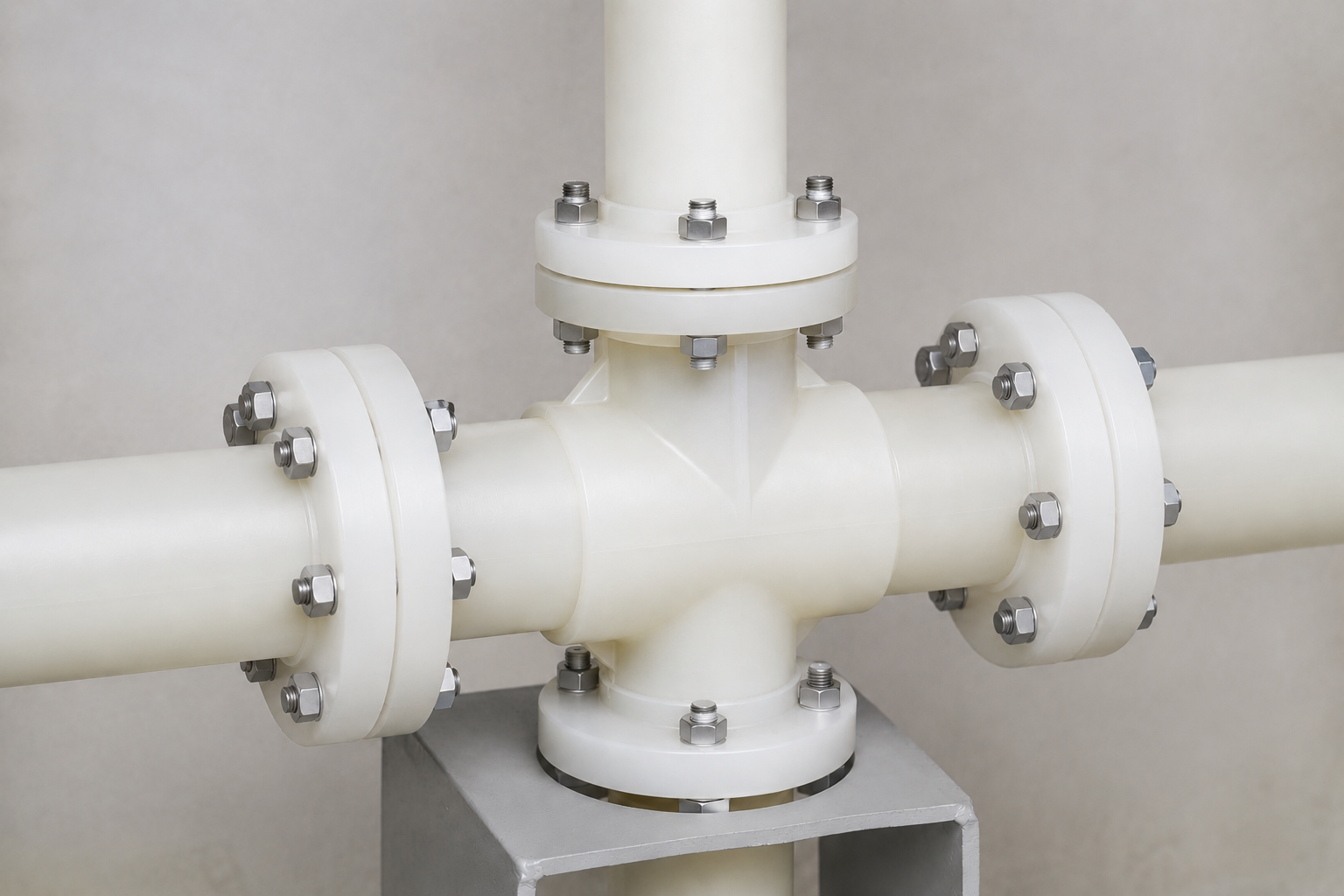
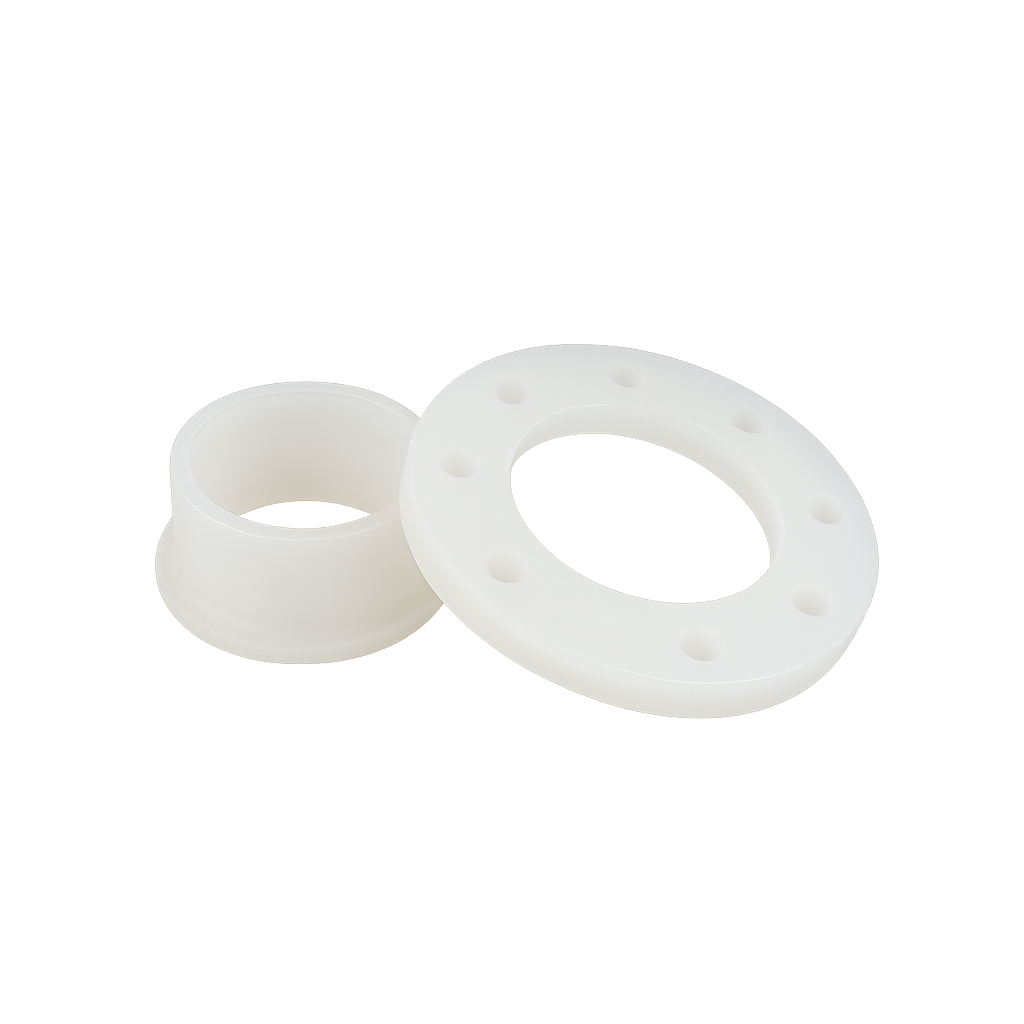
Flanged Connections
Used at equipment connections, valves, and points requiring future dismantling for maintenance or inspection.
PVDF vs. Other Piping Materials
Properties | PVDF | PPH | PVC | cPVC | Mild Steel / SS | |||||
|---|---|---|---|---|---|---|---|---|---|---|
Chemical Resistance | Excellent (acids, halogens, solvents) | Excellent (acids, alkalis, solvents) | Good | Very Good | Poor to Fair (corrodes) | |||||
Max. Continuous Temperature | ~140 °C | ~90°C | ~60°C | ~95–100°C | High, but limited by lining | |||||
Corrosion Resistance | Excellent — will not rust | Excellent — will not rust | Excellent | Excellent | Poor without coating/lining | |||||
Weight | Lightweight | Lightweight | Lightweight | Lightweight | Heavy | |||||
Purity / Extractables | Very Low | Low | Moderate | Moderate | N/A — requires lining for purity | |||||
UV / Weather Resistance | Excellent | Good | Fair | Fair to Good | Excellent (with coating) | |||||
Installation | Easy — fusion welding | Easy — fusion welding | Easy — solvent cement | Easy — solvent cement | Difficult — requires welding/lining | |||||
Maintenance | Low | Low | Low | Low | High | |||||
Relative Cost | Higher | Moderate | Low | Moderate-High | High (incl. lining/coating) | |||||
Available Products in PVDF Piping System
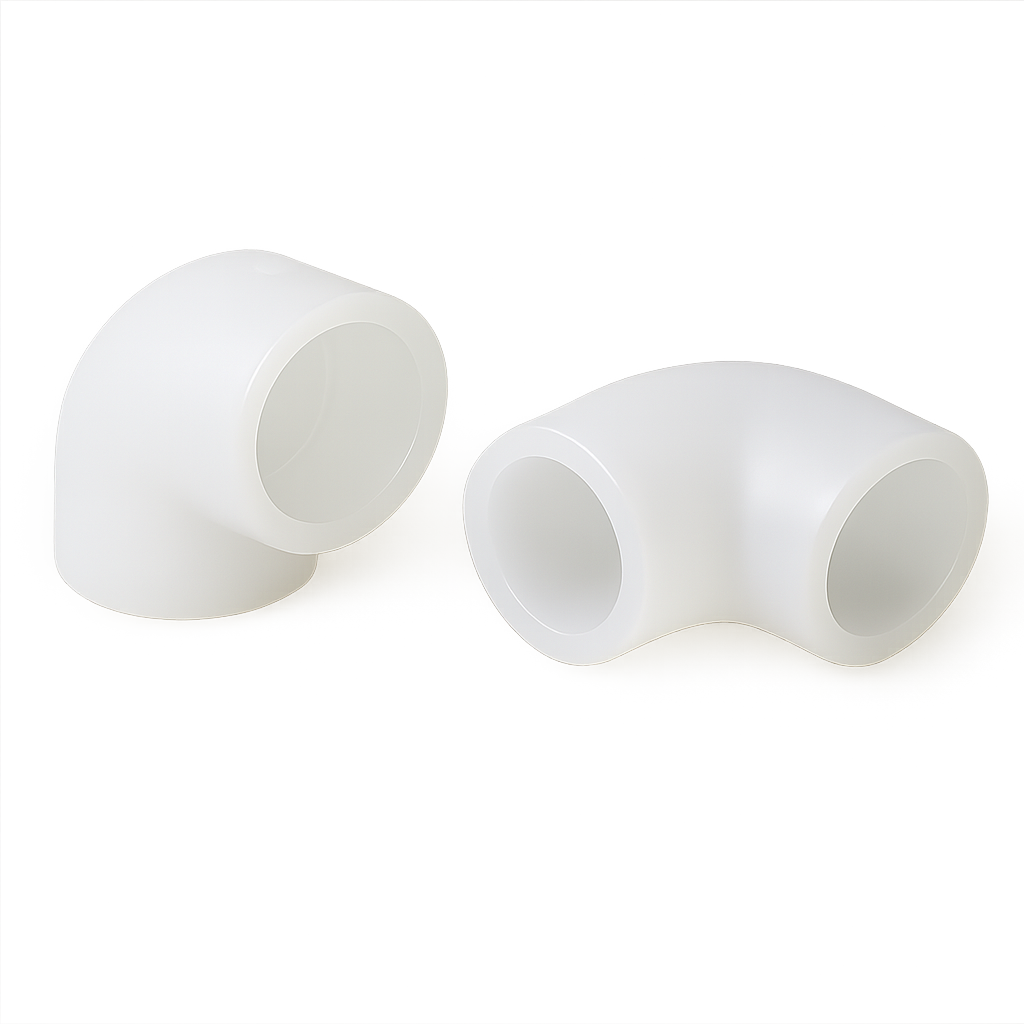
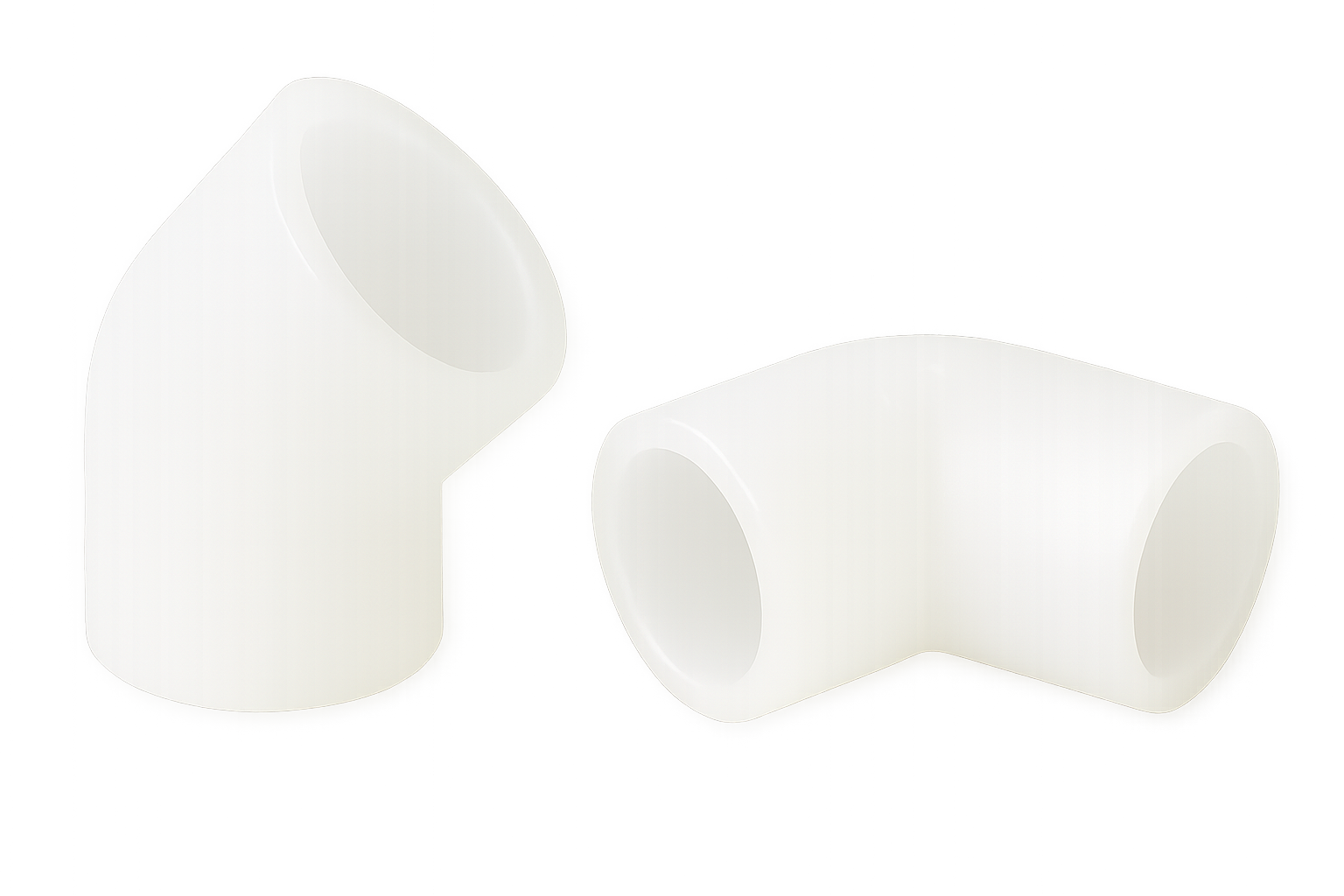
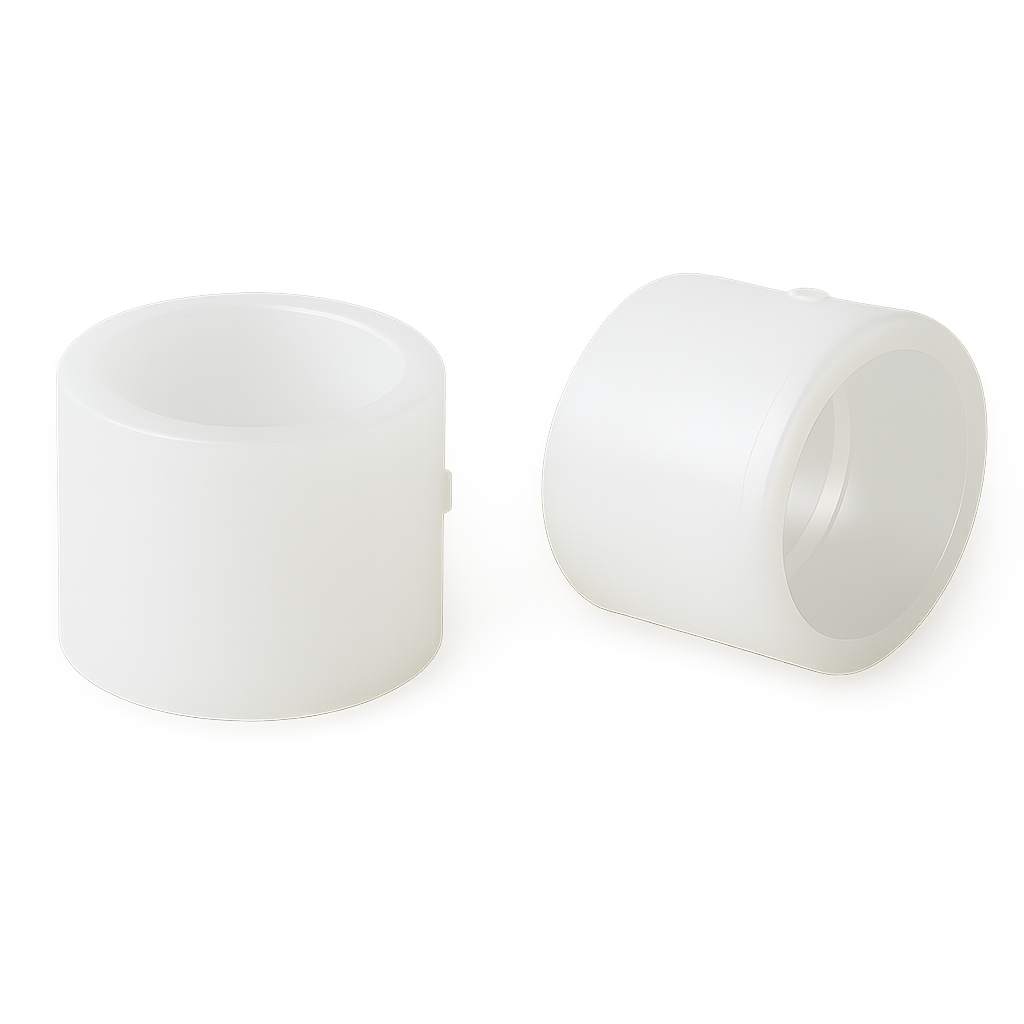
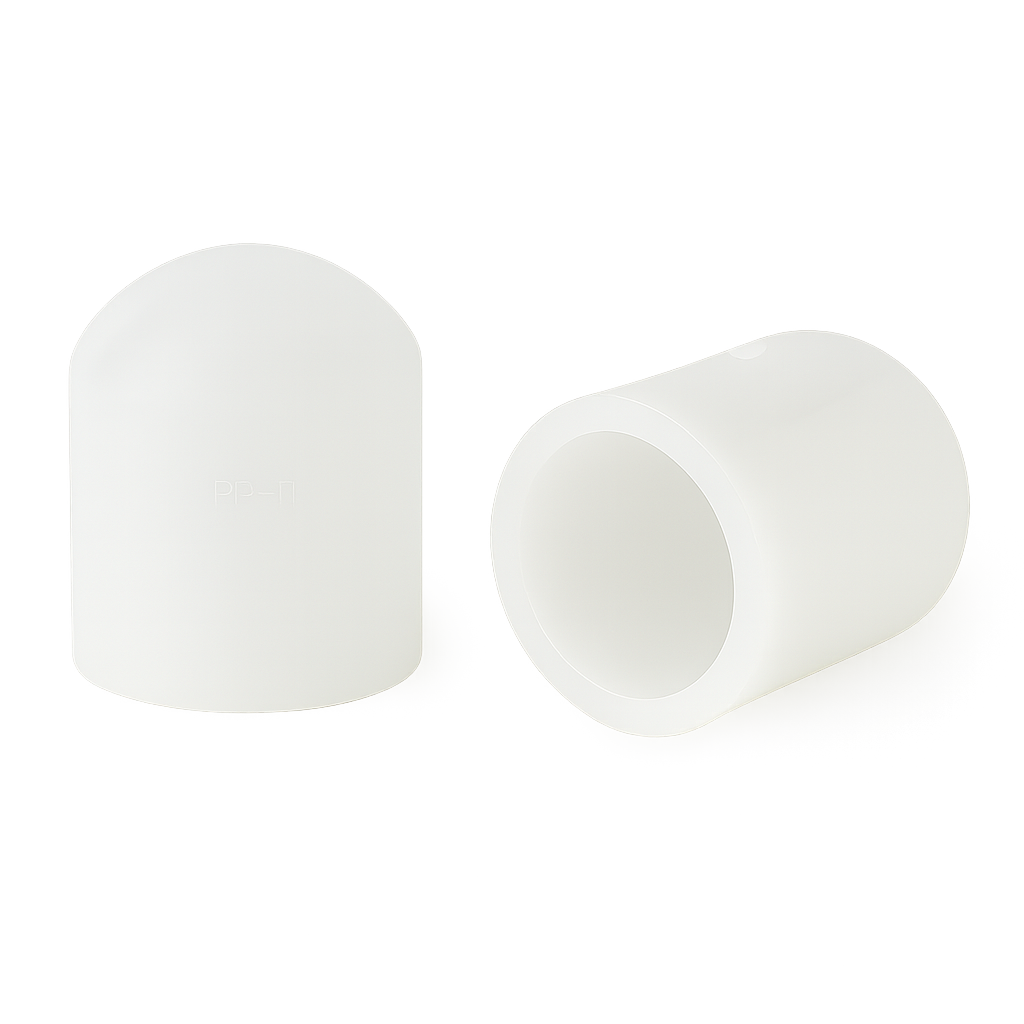
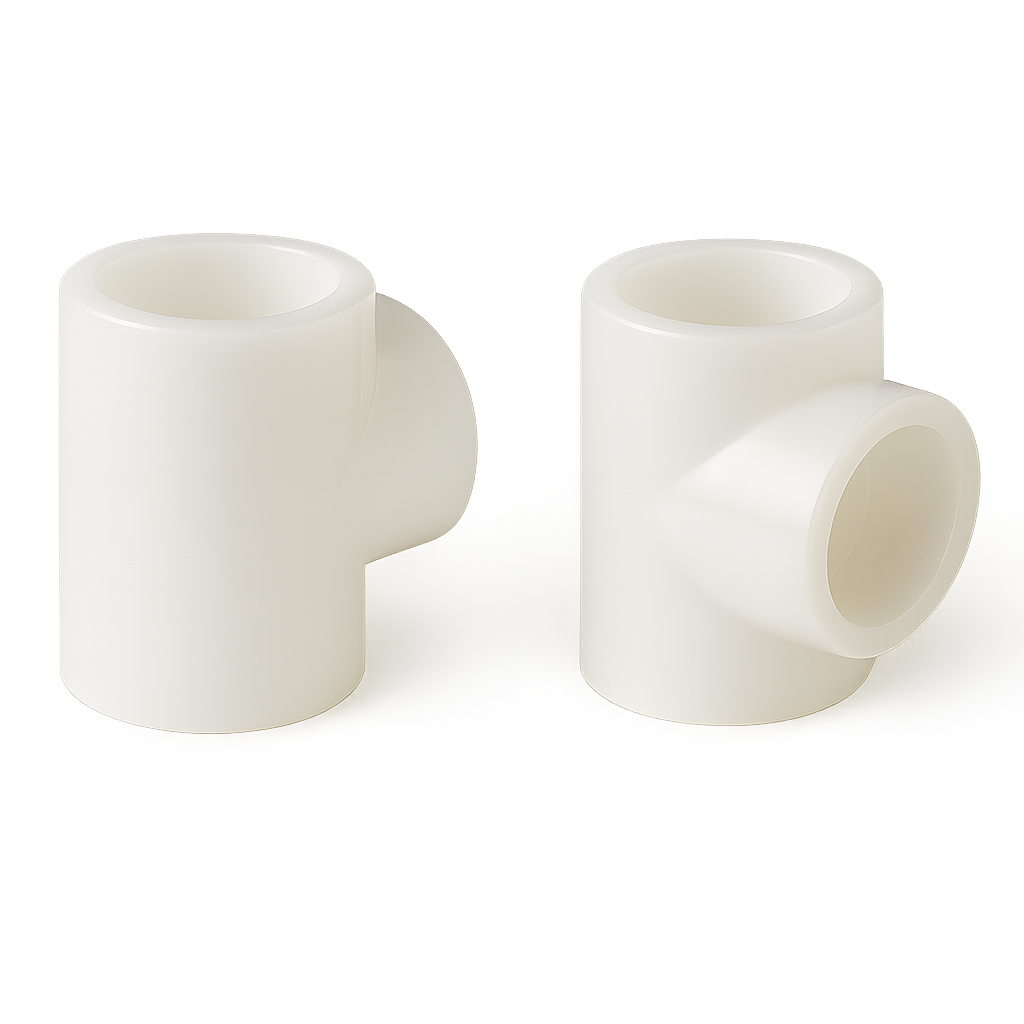
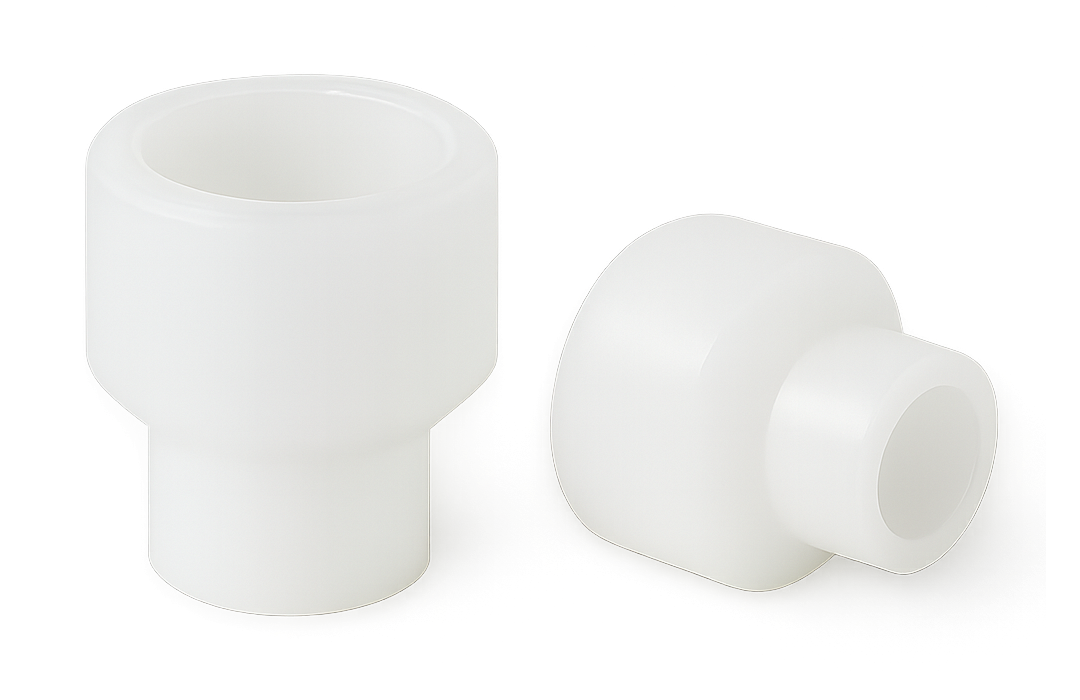
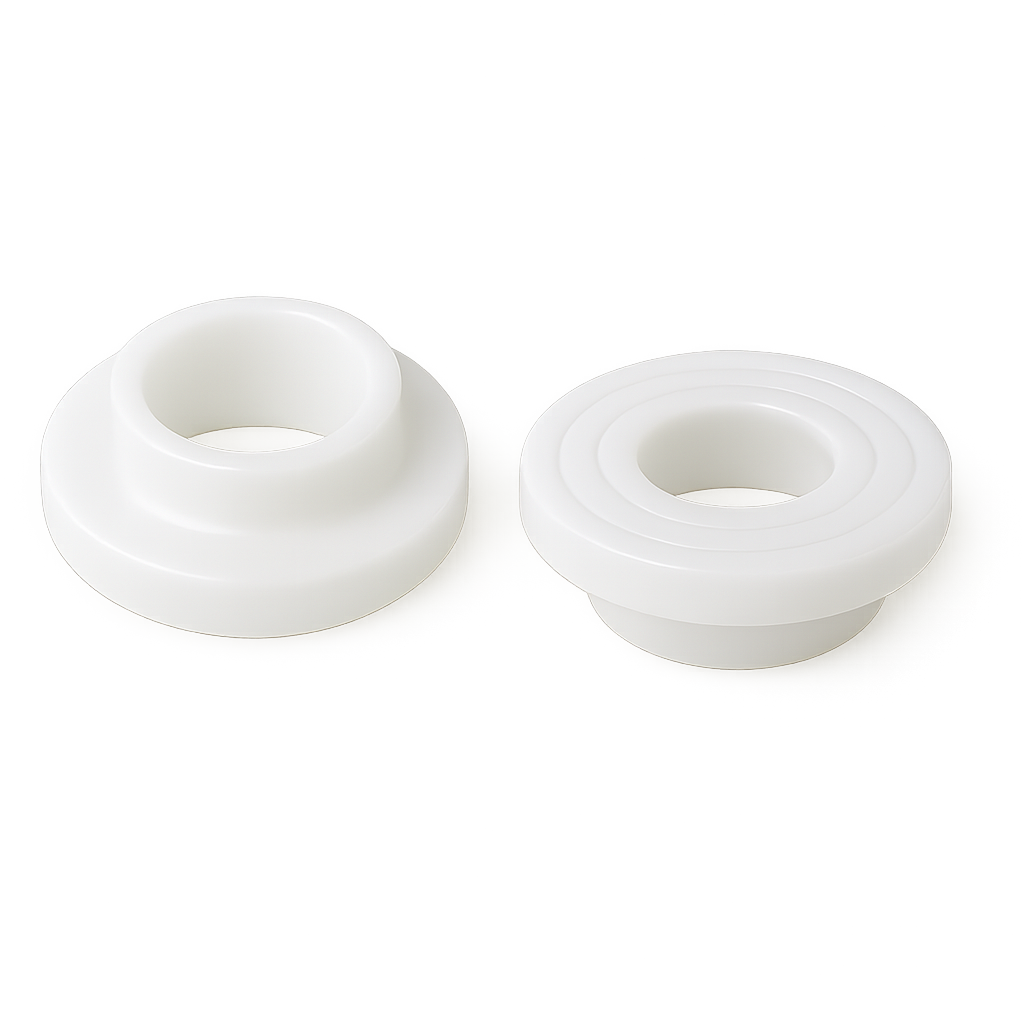
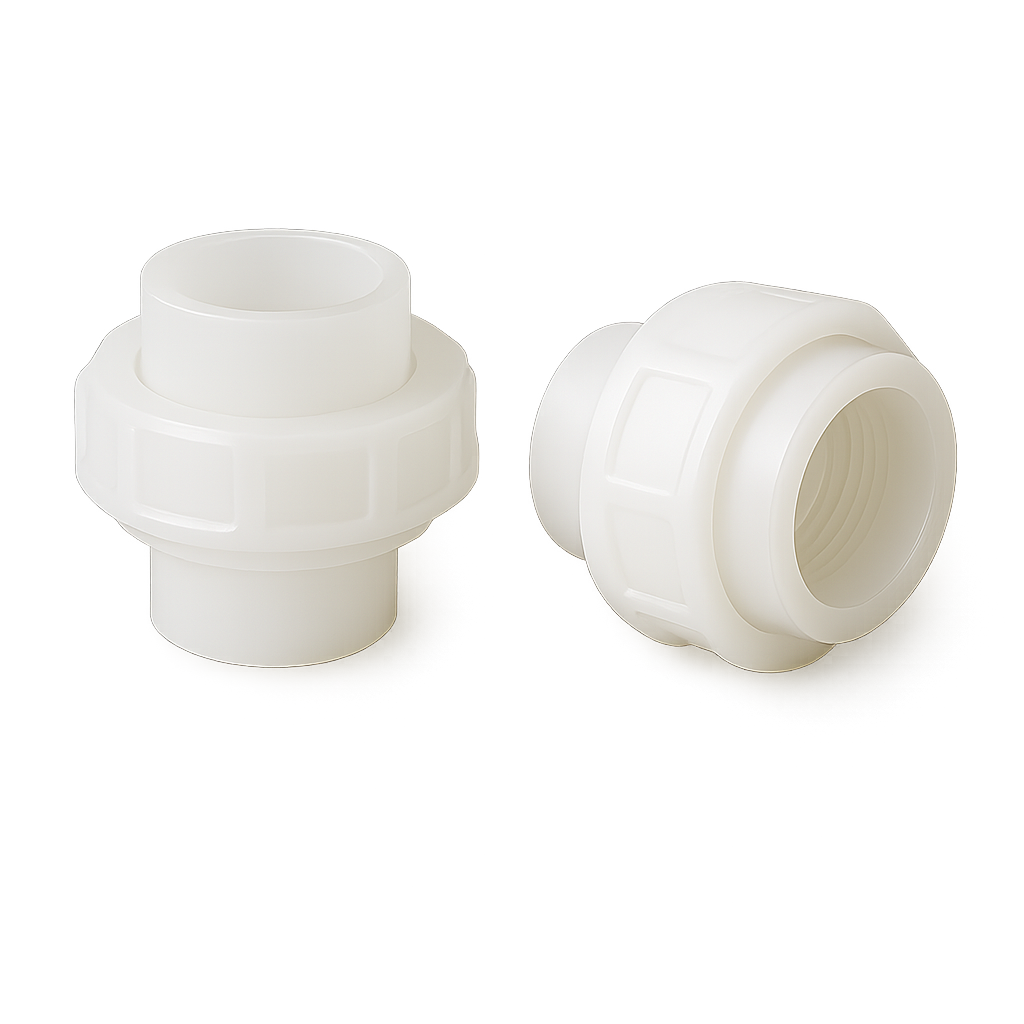
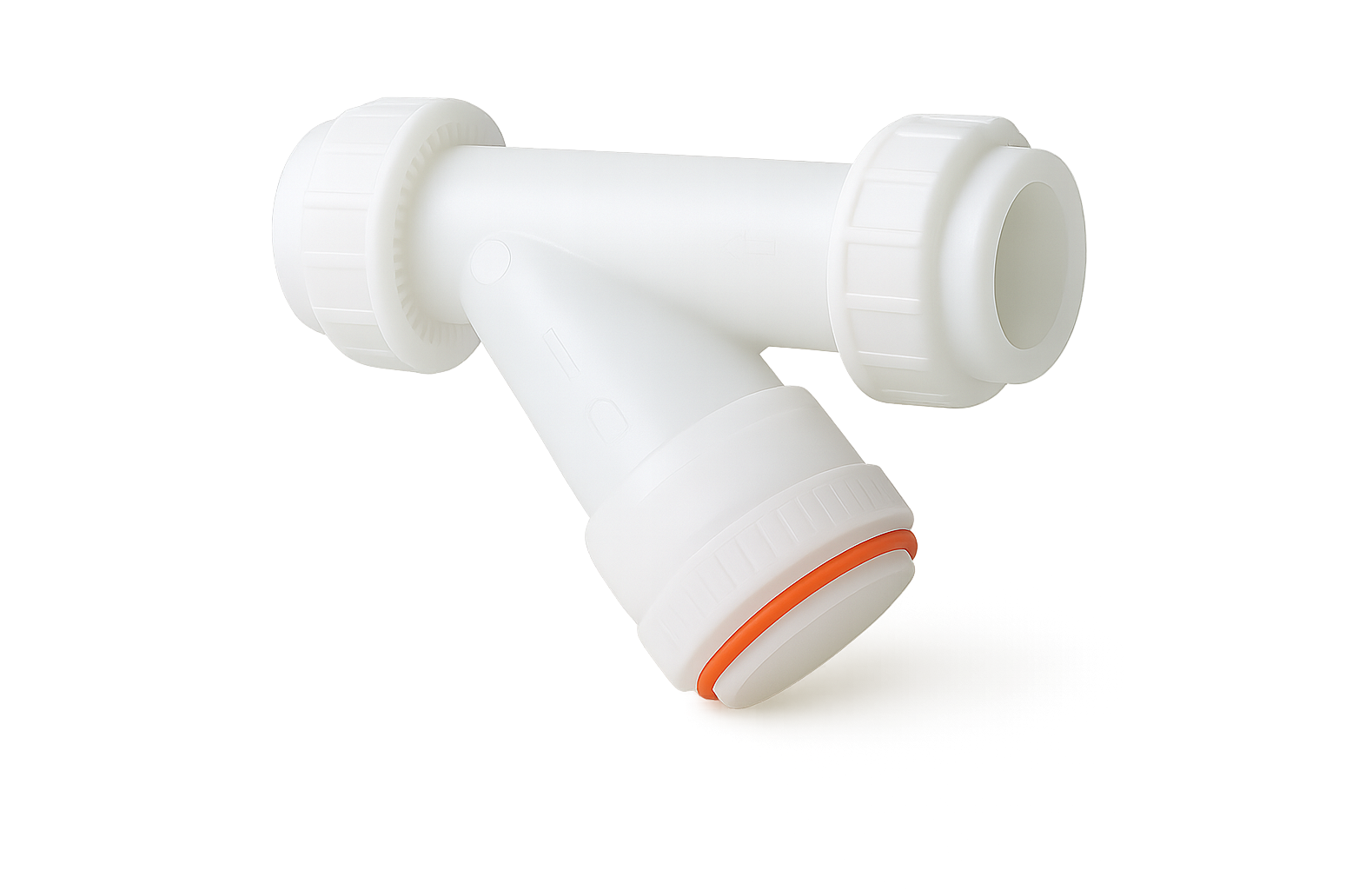
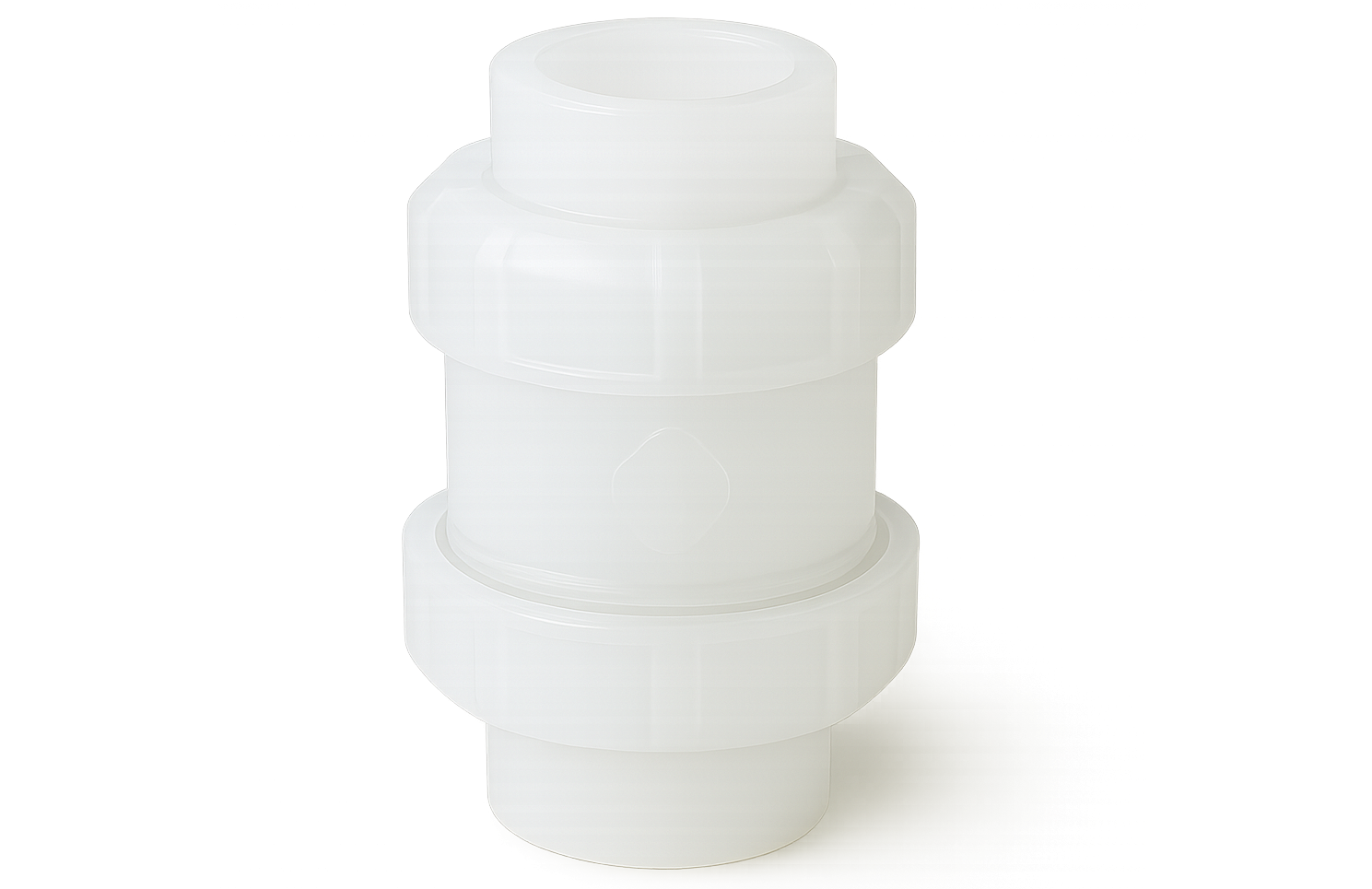
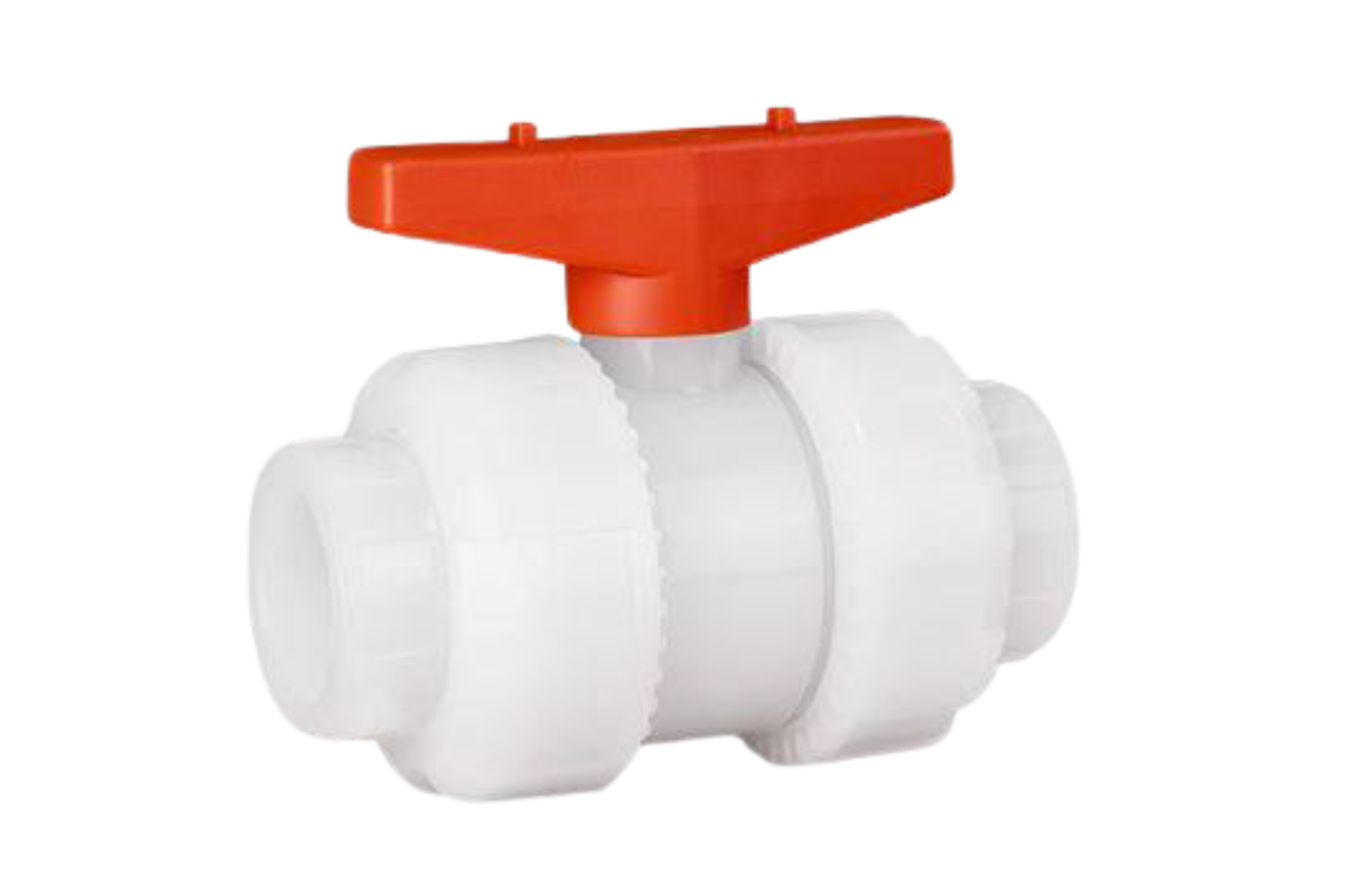
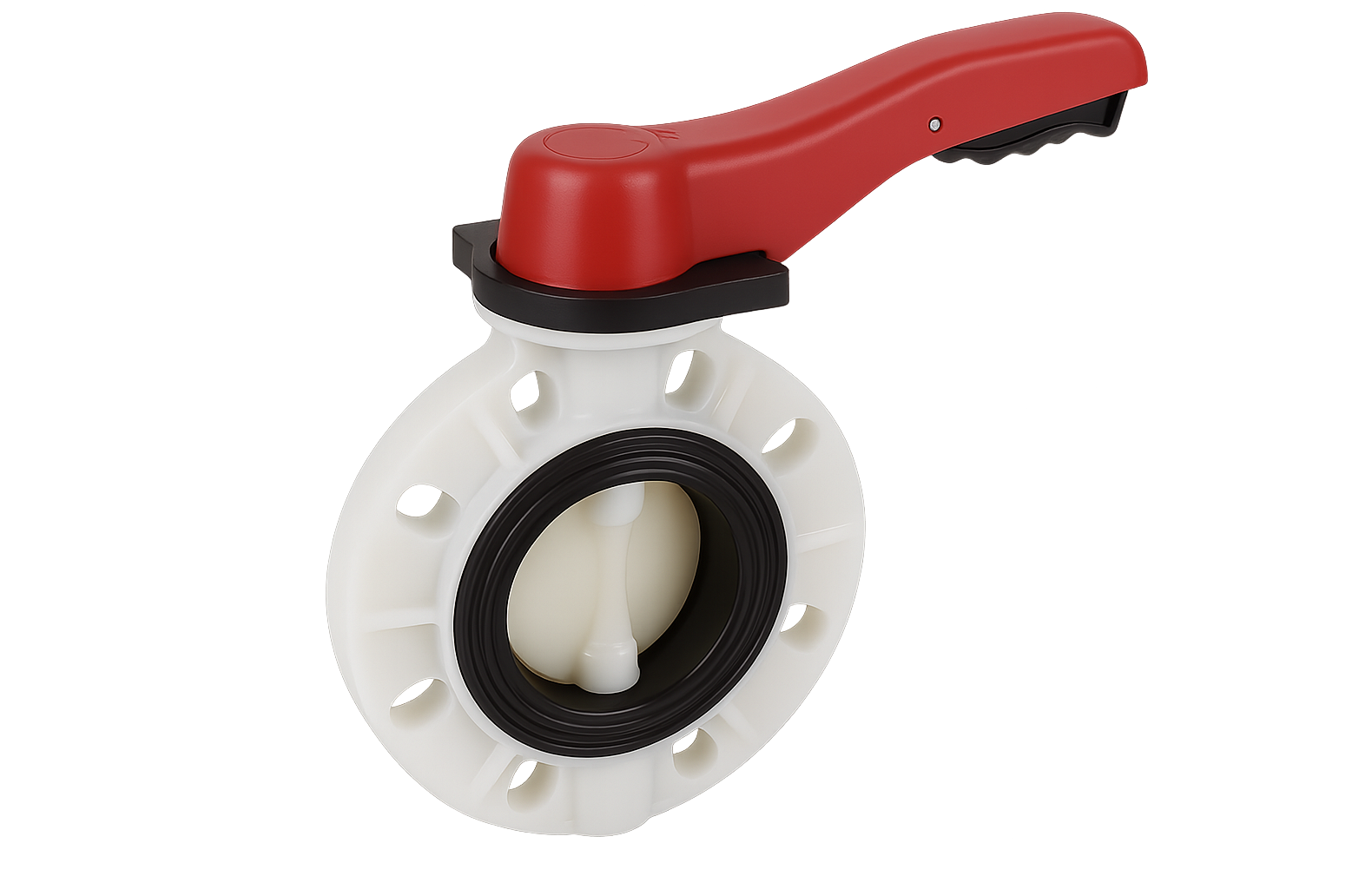
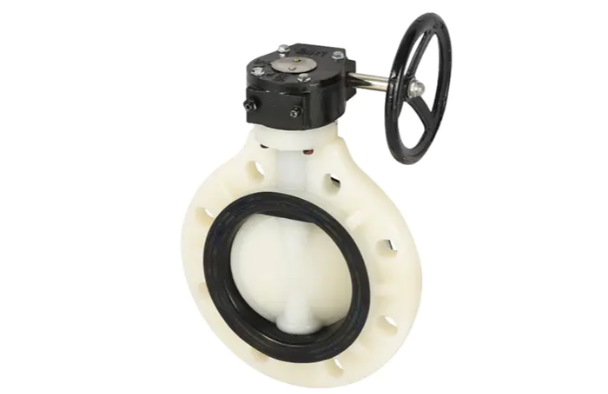
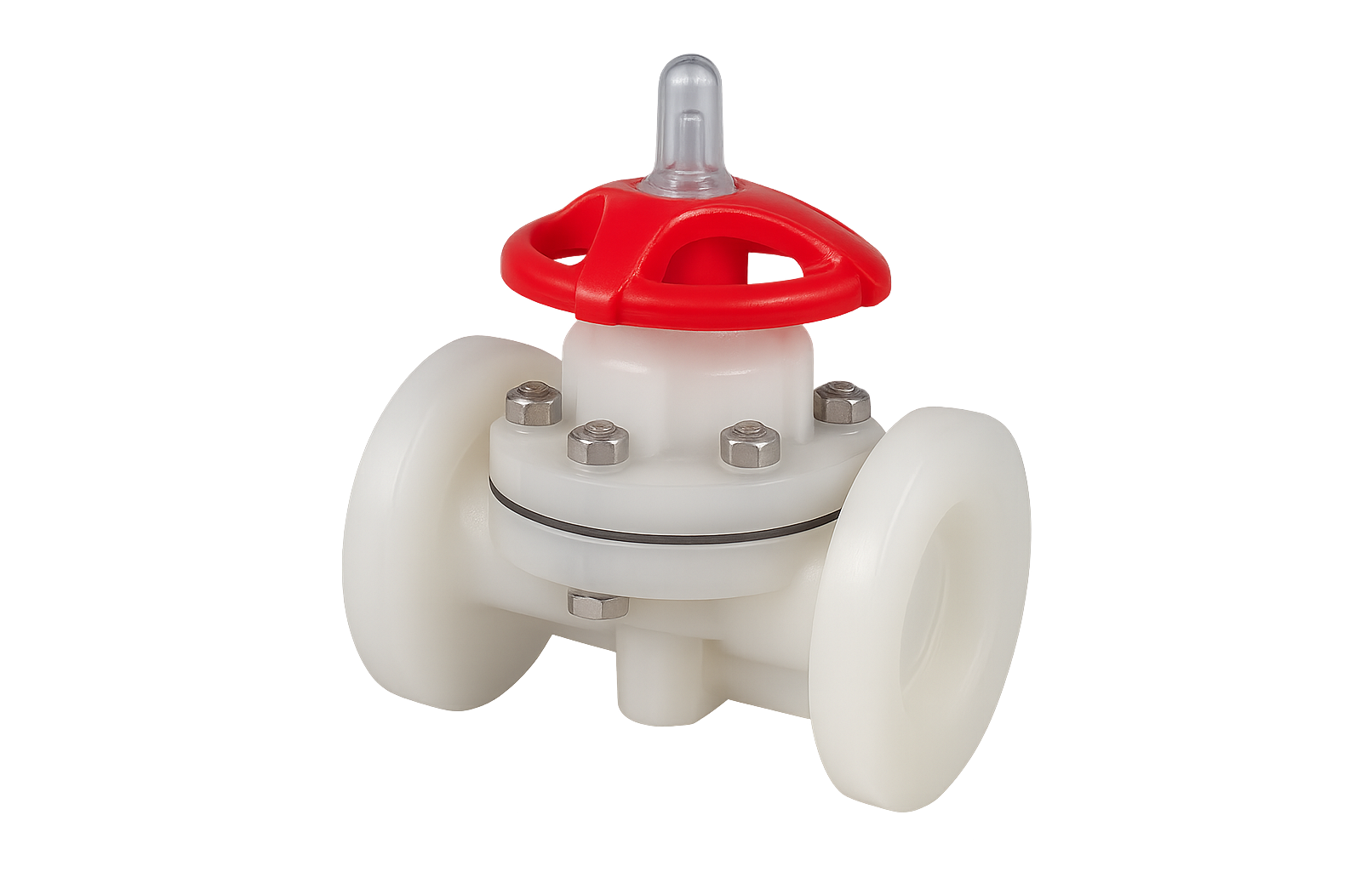
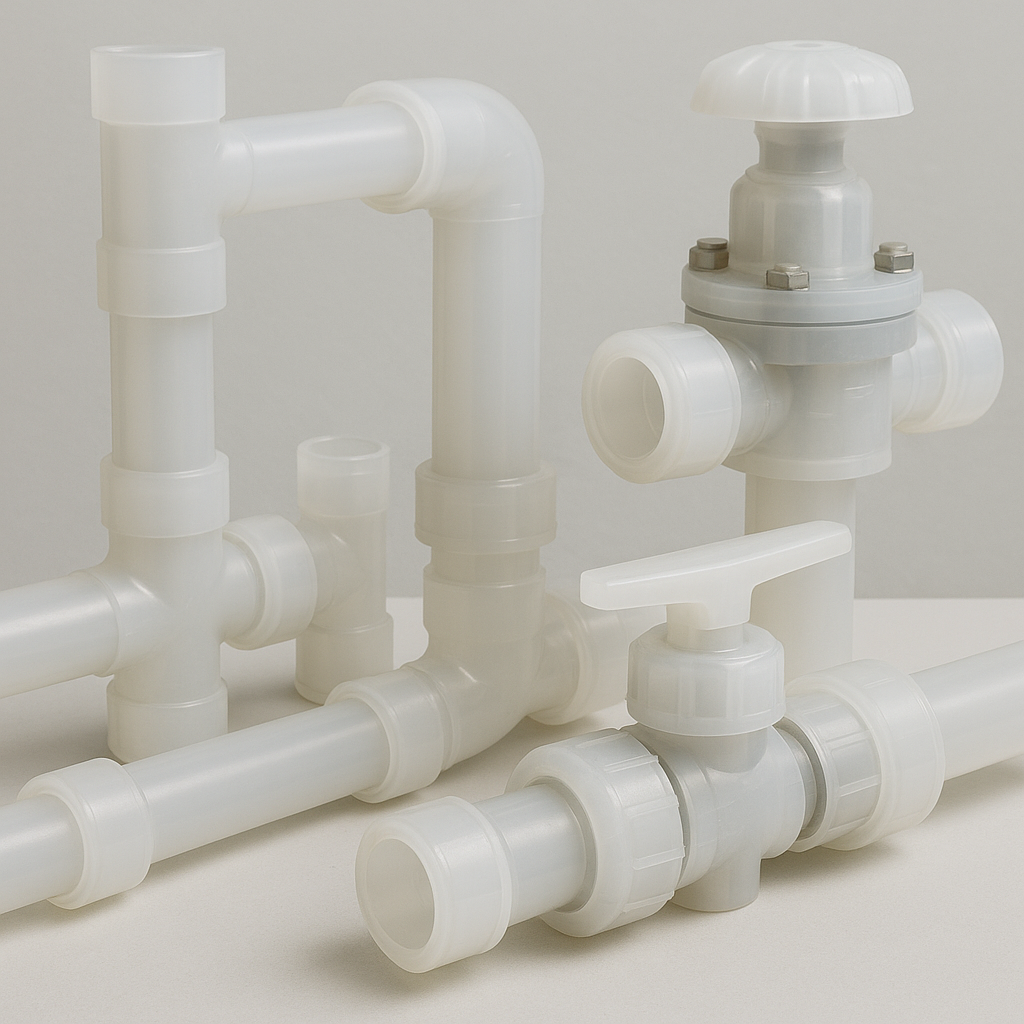
Starke Plastics offers a complete range of PVDF pipes, PVDF pipe fittings, valves, flanges, and accessories designed for high-purity and corrosive-service piping systems.
Everything about PVDF Piping System explained.
What is a PVDF piping system used for?
PVDF piping systems are used in semiconductor manufacturing, pharmaceutical production, ultra-pure water systems, chemical processing, and surface treatment plants where high chemical purity and resistance to aggressive media are required.
What standards do Starke PVDF pipes comply with?
Starke PVDF pipes are manufactured to ISO 10931 dimensional standards, which govern the sizing, wall thickness, and SDR/pressure rating classifications for PVDF piping systems.
What is the operating temperature range of PVDF pipes?
PVDF piping typically operates from around -20°C up to 140°C, depending on pressure and the specific chemical media, making it suitable for both hot and cold process lines.
How does PVDF differ from PPH piping?
PVDF offers higher chemical resistance (including to halogens and strong oxidizers), higher continuous operating temperature, and lower extractables/higher purity than PPH — making it the preferred choice for semiconductor, pharma, and ultra-pure water applications, while PPH remains a cost-effective choice for general acid/alkali transport at moderate temperatures.
Are PVDF pipes suitable for high-purity applications?
Yes. PVDF’s inert, non-leaching surface and low extractables make it a standard material choice for high-purity chemical delivery and ultra-pure water systems.
What jointing methods are used for PVDF piping?
PVDF pipe fittings and pipes are joined using socket fusion, butt fusion, extrusion welding (for larger diameters or on-site fabrication), and flanged connections depending on pipe diameter and system requirements.